July 10, 2021
·
3 min read
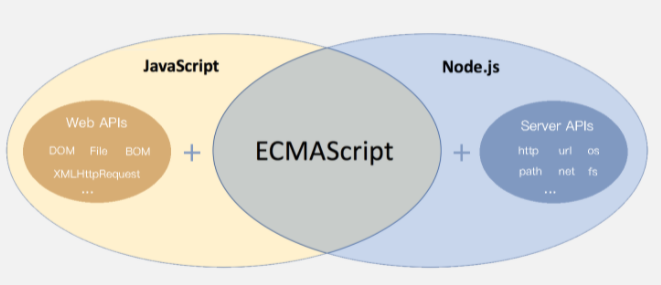
Strictly speaking, most of what we learned in the JavaScript section belongs to ECMAScript. ECMAScript, or ES, defines language standards such as the syntax rules for variables, data types, expressions, statements, and functions. Browsers implement most of the ECMAScript specification and extend it with practical features. These extensions are called Web APIs.
...
July 9, 2021
·
3 min read
JavaScript is a weakly typed, or dynamic, language. You do not need to declare a variable’s type in advance; its type is determined automatically while the program runs.
var age = 10; // Number
var areYouOk = 'yes'; // String
JavaScript has dynamic types, meaning the same variable can be used for different types (its type can change).
var x = 6; // x is a number
var x = "Bill"; // x is a string
July 9, 2021
·
5 min read
Objects are a JavaScript data type. We have already learned about numbers, strings, booleans, and undefined. An object can be understood as a collection of data. It consists of properties and methods.
...
July 9, 2021
·
3 min read
Declaration (Definition)
#
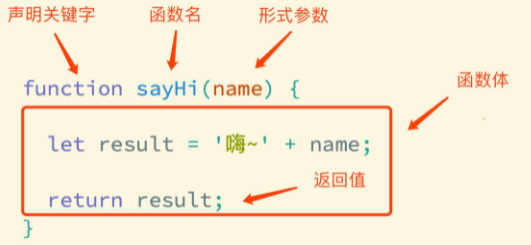
Declaring (defining) a complete function involves five parts: the keyword, function name, formal parameters, function body, and return value.
...
July 9, 2021
·
2 min read
Arrays: An array is a data type that stores data in order.
...
July 9, 2021
·
4 min read
Commonly used operators in JavaScript include:
- Arithmetic operators
- Increment and decrement operators
- Comparison operators
- Logical operators
- Assignment operators
...
July 7, 2021
·
6 min read
Brendan Eich (born 1961) completed the design of JavaScript in 10 days.
- It was originally named LiveScript and was later renamed JavaScript after a collaboration with Sun.
- JavaScript is one of the world’s most popular languages. It is a scripting language that runs on the client side (“script” means a script), and now it can also be used for server-side programming with Node. Js technology.
- Scripting language: it does not need to be compiled; during execution, the js interpreter (js engine) interprets and executes it line by line.
...
July 5, 2021
·
5 min read
A web page consists of three parts:
- Structure: written using HTML
- Presentation: CSS is used to set the styles of elements on the page
- Behavior: JavaScript is used to define the page’s behavior
HTML is HyperText Markup Language. It is responsible for the page’s structure and defines its various parts. HTML is written as plain text and uses HTML tags to identify the different parts of a page.
...