November 5, 2026
·
39 min read

Message queues can be used for decoupling, asynchronous processing, and absorbing traffic spikes, but introducing them also means handling duplicate consumption, message loss, out-of-order processing, and backlogs. Knowing how to call the send and consume APIs is not enough to understand their role in a system.
This article starts with why to use MQ, then covers high availability, idempotency, reliable delivery, ordering, and backlog handling in sequence, before bringing these mechanisms together to examine message queue architecture design.
Read the full text -> A total of 7.86k words
November 4, 2026
·
28 min read

Database and table sharding splits data originally concentrated in one database and one table across multiple tables and database servers, allowing them to share the storage and access load.
Read the full text -> A total of 5.71k words
October 31, 2026
·
10 min read

Rate limiting controls the number or rate of requests admitted into a system, preventing traffic bursts from exhausting threads, connections, and database processing capacity.
Read the full text -> A total of 2.03k words
October 18, 2026
·
9 min read

“If the price goes up, you earn USDT. If it goes down, you earn more crypto.”
It sounds as though you come out ahead whichever way the market moves. Add an advertised annualized return of several dozen percent—or more—and dual investment can look like a more productive alternative to simply holding crypto.
But there is a catch: owning more units of an asset does not necessarily mean your investment is worth more.
Read the full text -> A total of 1.97k words
October 18, 2026
·
11 min read
When you first encounter options, four terms come up again and again:
Buy a call. Sell a call. Buy a put. Sell a put.
These are not four unrelated strategies. They are combinations of two choices:
- Are you trading a call or a put?
- Are you buying it or selling it?
To understand these four basic positions, start with one idea: an option gives its buyer a right to transact in the future. Trading that right is different from buying or selling the asset itself.
Read the full text -> A total of 2.39k words
October 12, 2026
·
7 min read
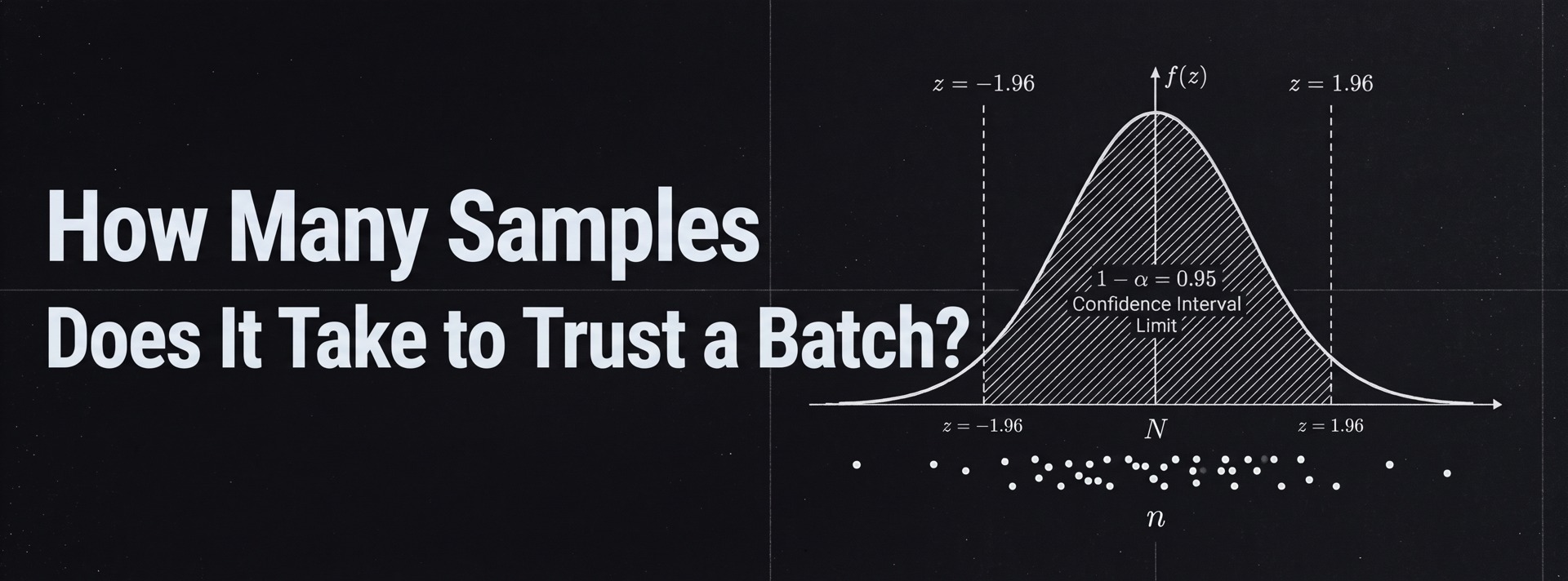
You have 1,000 items, but testing every one of them is expensive. How many should you randomly inspect: 10, 100, or half the batch?
There is no universal answer based on population size alone. As the NIST/SEMATECH e-Handbook explains, sample-size planning depends on the statistical objective and precision requirements. The useful question is: How many items do I need to estimate a proportion with a chosen level of precision? Under common assumptions, the answer is 278—not an arbitrary percentage of the batch.
Read the full text -> A total of 1.51k words
September 15, 2026
·
3 min read
Stop Slop is a lightweight, open-source prompt skill for editing English prose that exhibits predictable LLM writing patterns. It provides Markdown instructions and examples for making generated or revised text more direct, concrete, and editorially restrained.
Read the full text -> A total of 0.66k words
September 14, 2026
·
8 min read
让 AI 写中文,有时候会得到一篇很工整的文章。句子通顺,段落也齐全,就是读着有点累,像在看一份说明书。最近看到一个专门处理这类问题的 Skill,叫 human-writing,中文名是“活人感写作”。里面主要是 Markdown 写作规则,还有一个 Python 检查脚本。
Read the full text -> A total of 1.76k words
January 29, 2026
·
2 min read

If you’re located outside the United States and trying to subscribe to Gemini Pro, you might have encountered the frustrating “Not available in your region” message. This guide explains why this happens and how to fix it.
Read the full text -> A total of 0.51k words
January 13, 2026
·
4 min read

Vim is a powerful command-line text editor that’s been around for decades, and it’s still widely used today. Whether you’re SSH-ing into a remote server or just prefer the keyboard-centric workflow, Vim is often the go-to choice. The learning curve can be steep at first — I remember the first time I opened Vim and couldn’t even figure out how to quit. But once you get the hang of it, the efficiency gains are real. This cheatsheet covers the essentials I use most often, and I’m trying to condense them.
Read the full text -> A total of 0.81k words